

A01 – Polymeric monoliths
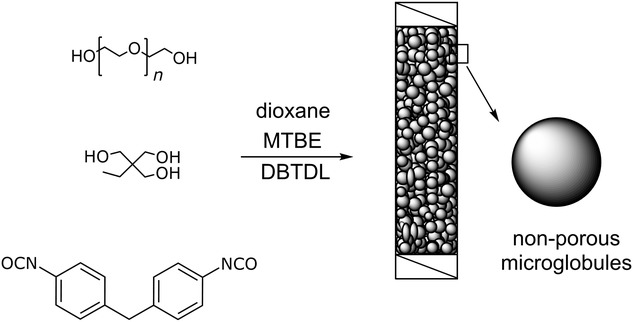
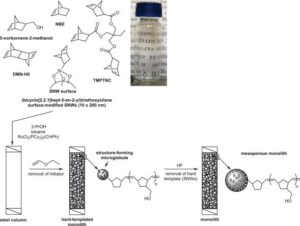
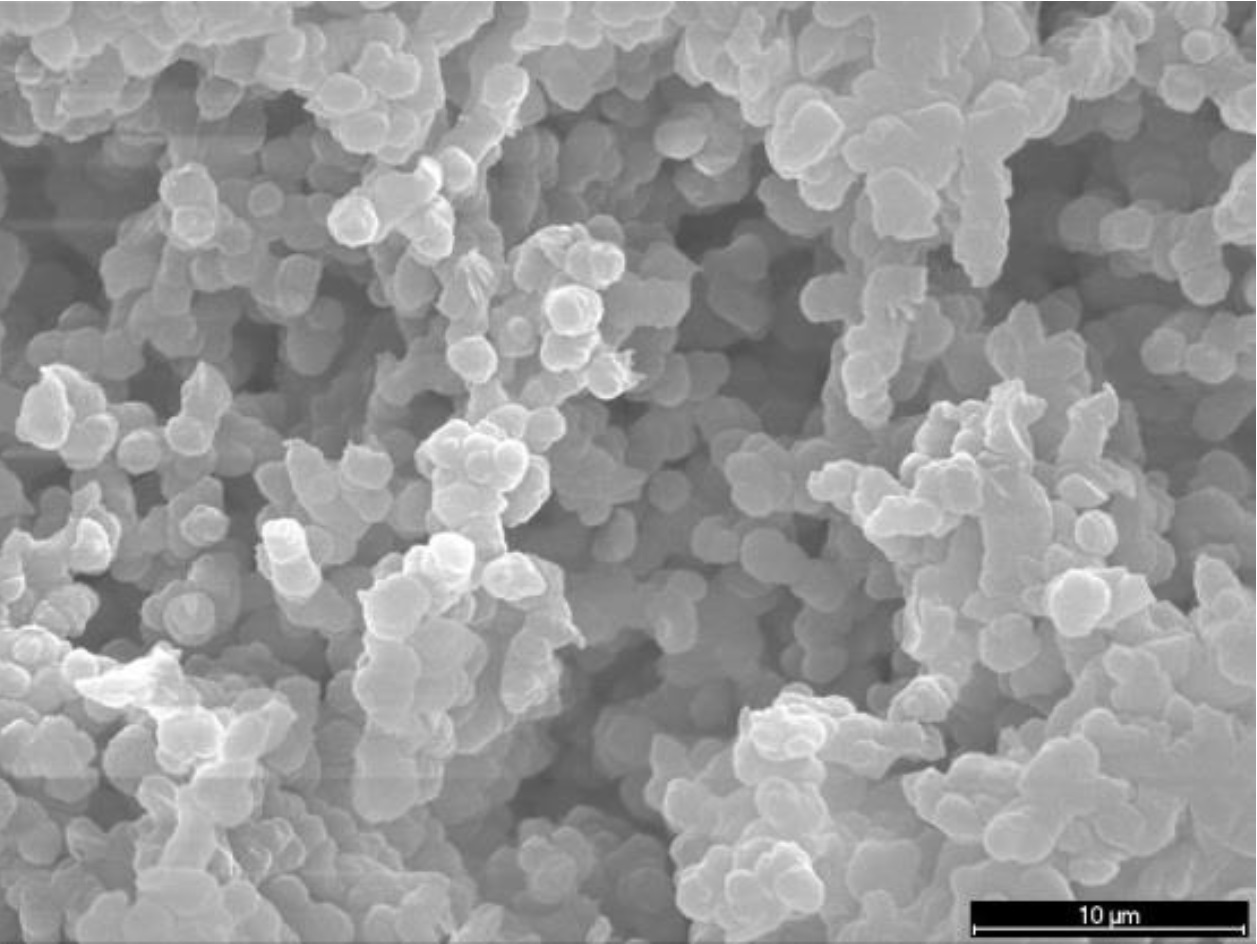
Poly(urethane)-based polymeric monolithic materials with mesopores, e.g., 5, 10, 15 or 20±1 nm in diameter, will be generated. Janus-type nanoparticles equipped with one polymer-compatible and one polymer-incompatible hemisphere will be used in course of monolith synthesis such that they are finally located and half-embedded at the surface of the structure forming microglobules. Alternatively, polymeric monoliths with a defined pore-size distribution will be generated via solvent-induced phase separation. Pore-size selective functionalization approaches are outlined.
Research Questions
- Can we introduce tailored mesoporosity in the range of 2–20 nm into polymeric monoliths, whether by a hard templating or a solvent-induced phase separation approach?
- How narrow is the pores size distribution?
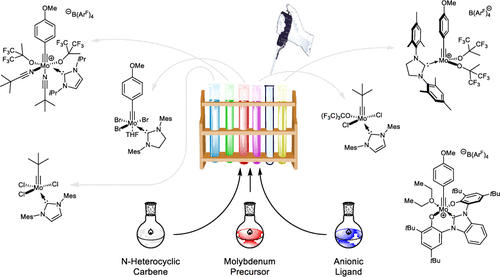
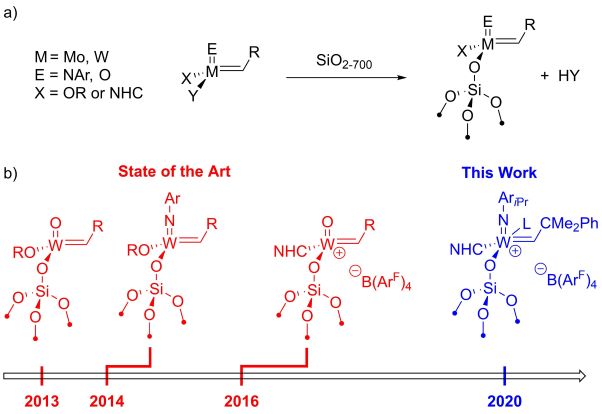
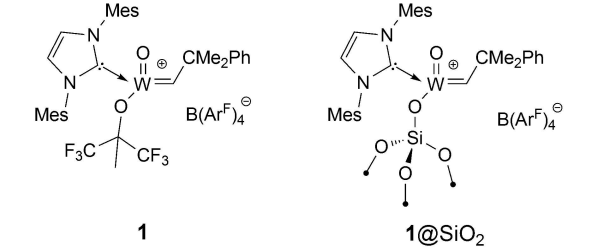
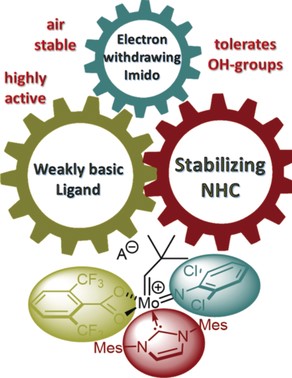
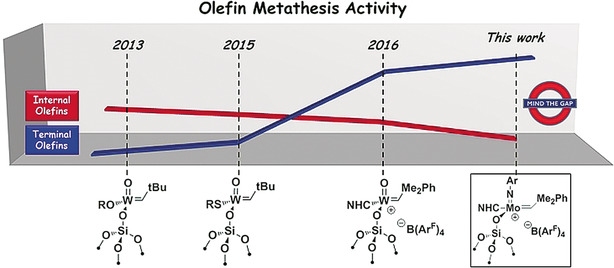
- How do surface-located functional groups influence catalyst activity, e.g. in olefin metathesis?
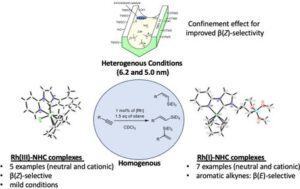
- Can polymeric mesoporous monoliths in combination with supported ionic liquid phase (SILP) technology provide a suitable confinement for catalytic reactions?