


A04 – ML potentials for confined catalytic steps in OM2S
Holistic modelling of confined elementary catalytic steps in ordered mesoporous (metallo)-silicates using ab initio-based machine-learning interatomic potentials
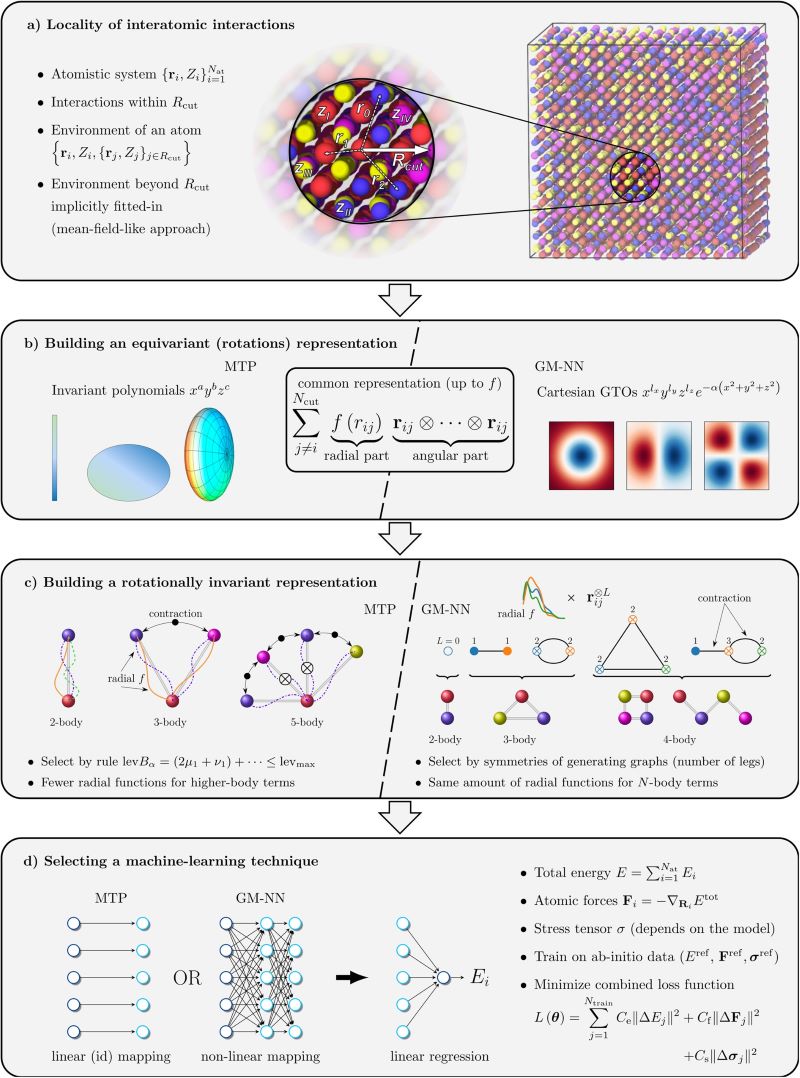
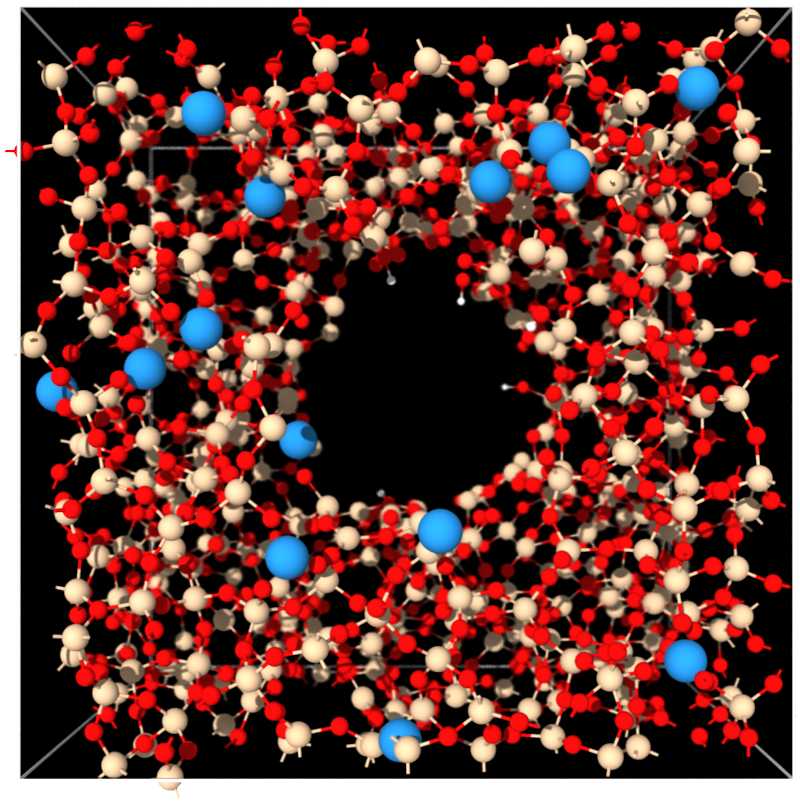
We propose developing machine-learning interatomic potentials (MLIPs) based on density functional theory to efficiently yet accurately simulate catalytic steps under confinement. We build on the expertise gained during the second funding period, in which we mastered the synthesis and characterization of ordered mesoporous (metallo)-silicates both experimentally and through simulation. The planned simulations will facilitate a detailed, mechanistic understanding of confined catalysis at the atomic scale, including the interaction of the catalyst with the pore wall.
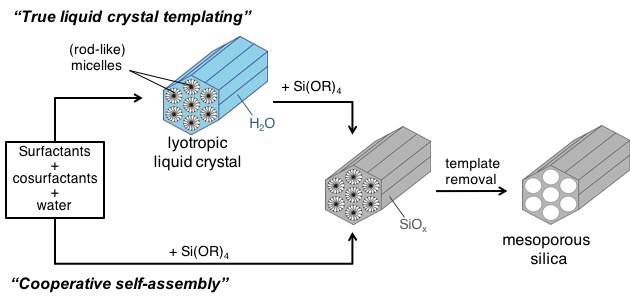
Research focus in the first funding period (2018-2022): Controlled synthesis of mesoporous silica materials
Former PIs: Prof. Dr. Frank Gießelmann, Prof. Dr. Yvonne Traa
Research focus in the second funding period (2022-2026):Mesoporous metallo-silicates with defined electronic and geometric properties: A combined experiment-theory approach
Former PIs: Dr. Johanna Bruckner
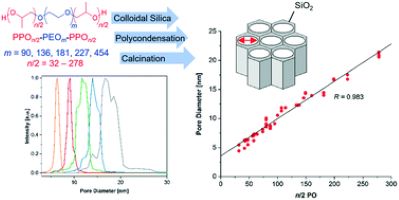
Production of tailor-made ordered mesoporous metallo-silicates (OM2S) for optimized catalytic applications, as well as creation of a profound understanding of their electronic structure and resulting properties.
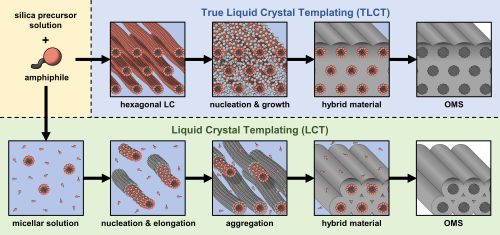
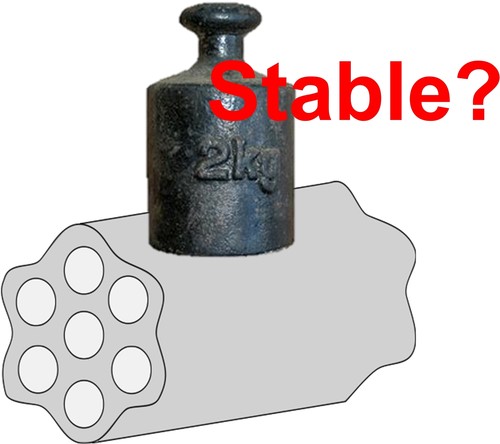
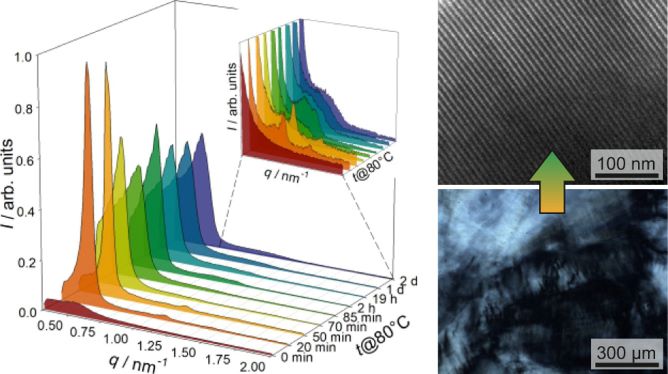
Enhanced Aging Stability of Ordered Mesoporous Silica Materials Synthesized via True Liquid Crystal Templating—A Small-Angle X-Ray Scattering Study
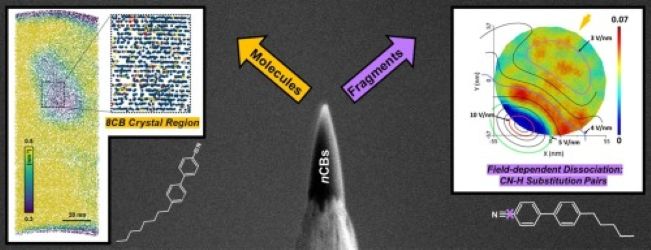
Revealing nanoscale molecular organization in Liquid Crystals via cryogenic Atom Probe Tomography
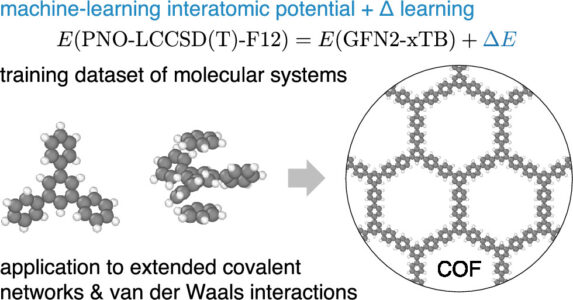
Machine-Learning Interatomic Potentials Achieving CCSD(T) Accuracy for Systems with Extended Covalent Networks and van der Waals Interactions
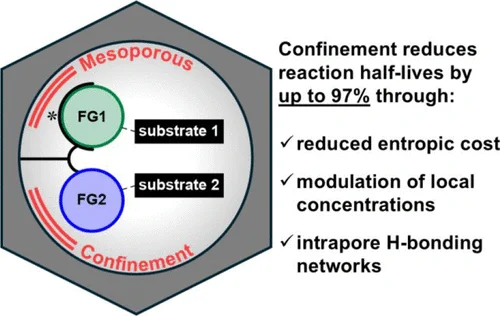
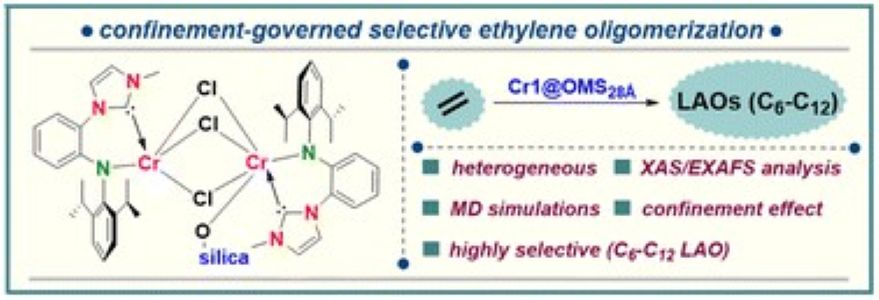
Ethylene Oligomerization Under Confinement Using Supported Cr(II) and Cr(III) Catalysts
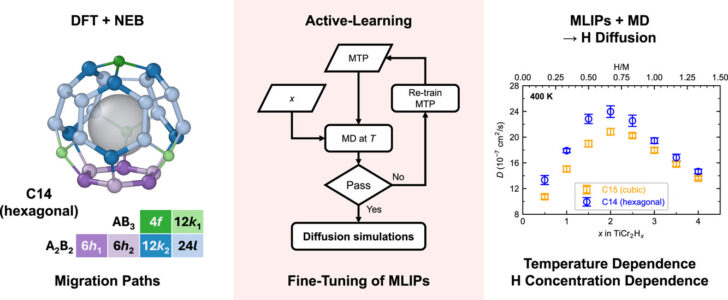
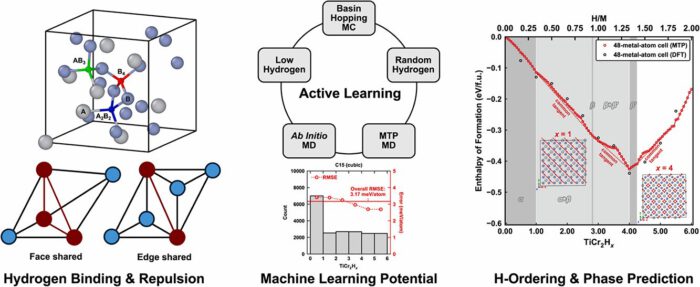
Hydrogen diffusion in TiCr₂Hx Laves phases: A combined ab initio and machine-learning-potential study
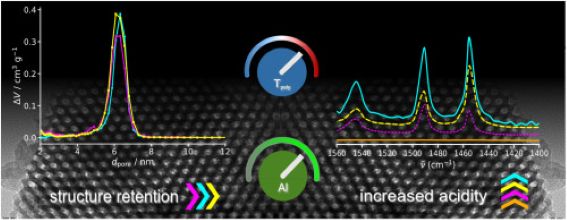
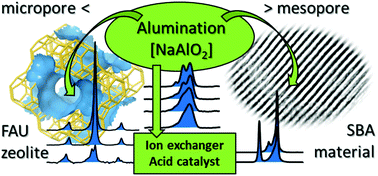
Efficient synthesis of well-defined ordered mesoporous aluminosilicates with tailorable acidity
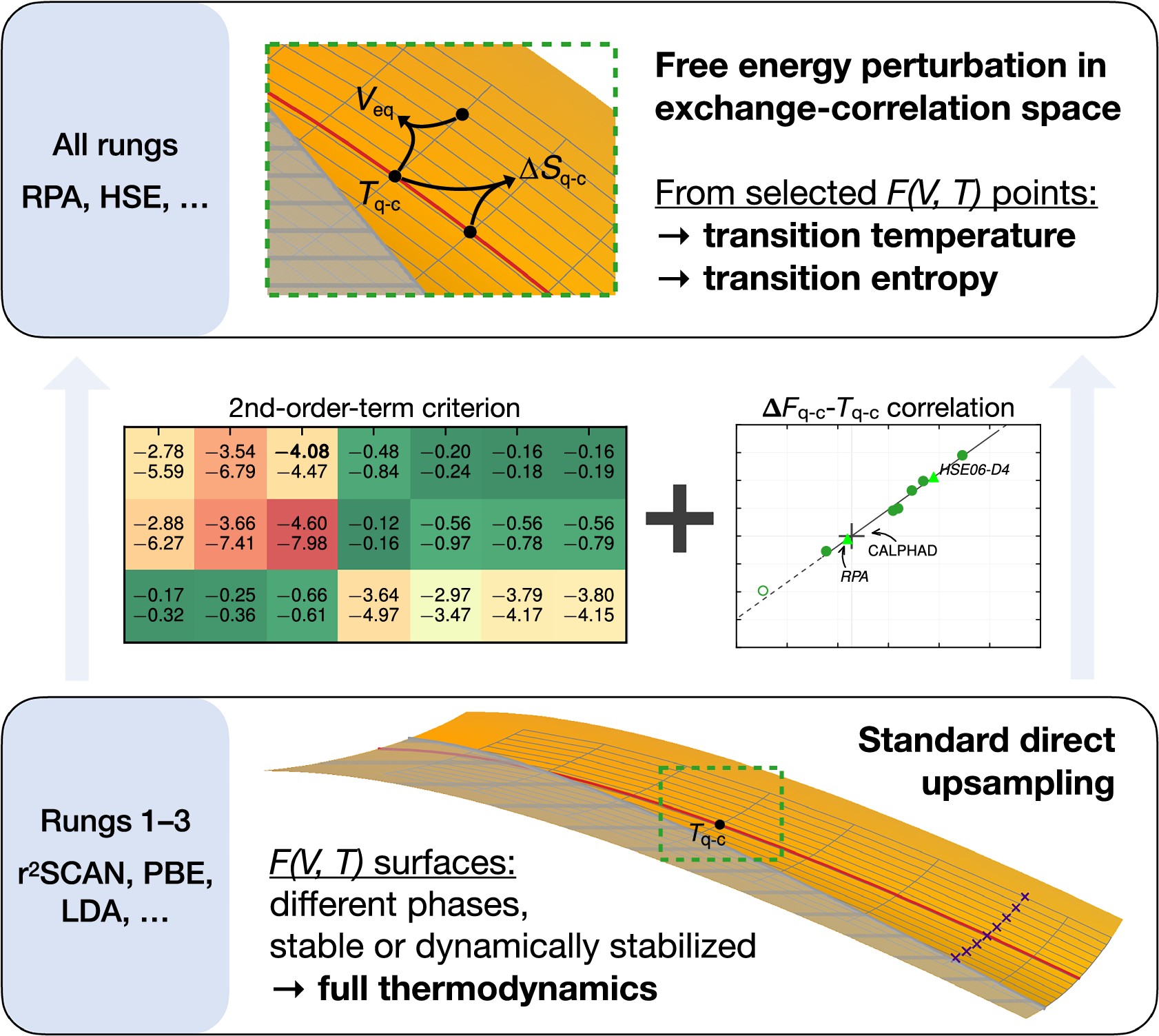
Free-energy perturbation in the exchange-correlation space accelerated by machine learning: application to silica polymorphs
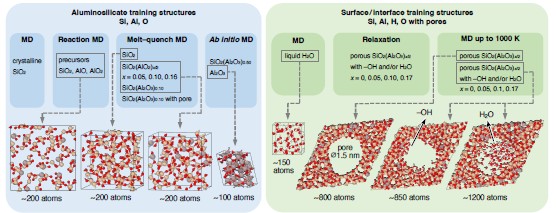
End-to-end machine-learned interatomic potentials for modeling functionalized mesoporous aluminosilicates
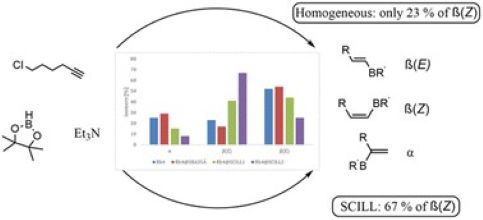
Confinement-induced Z-selectivity in the rhodium N-heterocyclic carbene-catalyzed hydroboration of terminal alkynes
Machine learning potentials for hydrogen absorption in TiCr₂ Laves phases
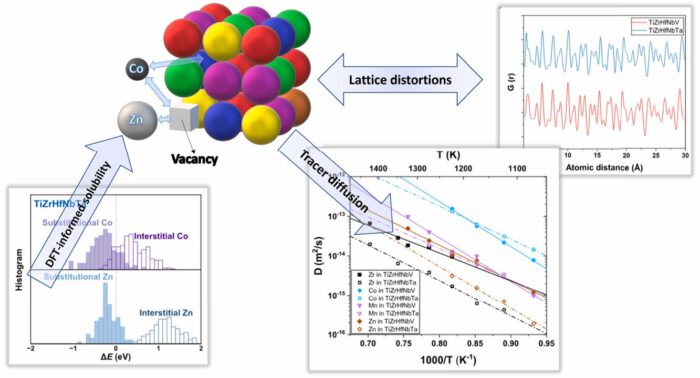
Lattice distortions and non-sluggish diffusion in BCC refractory high entropy alloys
Ring-Expansion Metathesis Polymerization Under Confinement
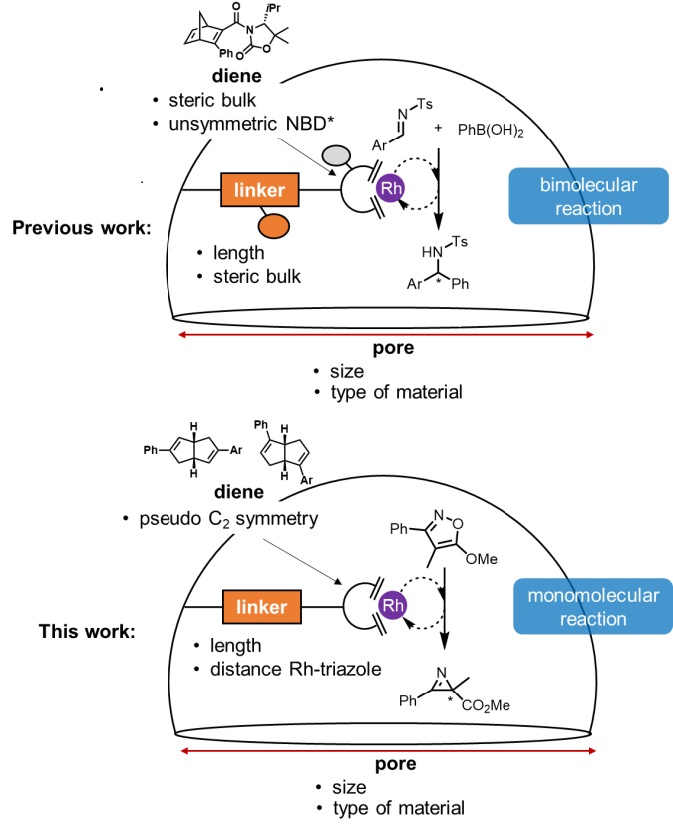
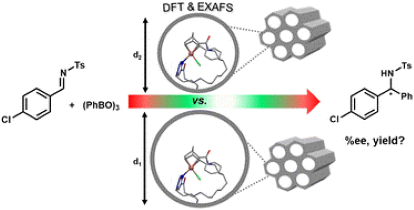
Asymmetric Rh Diene Catalysis under Confinement: Isoxazole Ring-Contraction in Mesoporous Solids
M. Marshall, Z. Dilruba, A.-K. Beurer, K. Bieck, S. Emmerling, F. Markus, Ch. Vogler, F. Ziegler, M. Fuhrer, S. S. Y. Liu, S. R.Kousik, W. Frey, Y. Traa, J. R. Bruckner, B. Plietker, M. R. Buchmeiser, S. Ludwigs, S. Naumann, P. Atanasova, B. V. Lotsch, A. Zens and S. Laschat
Eur. J. Org. Chem. 2024, 27, e202400283.
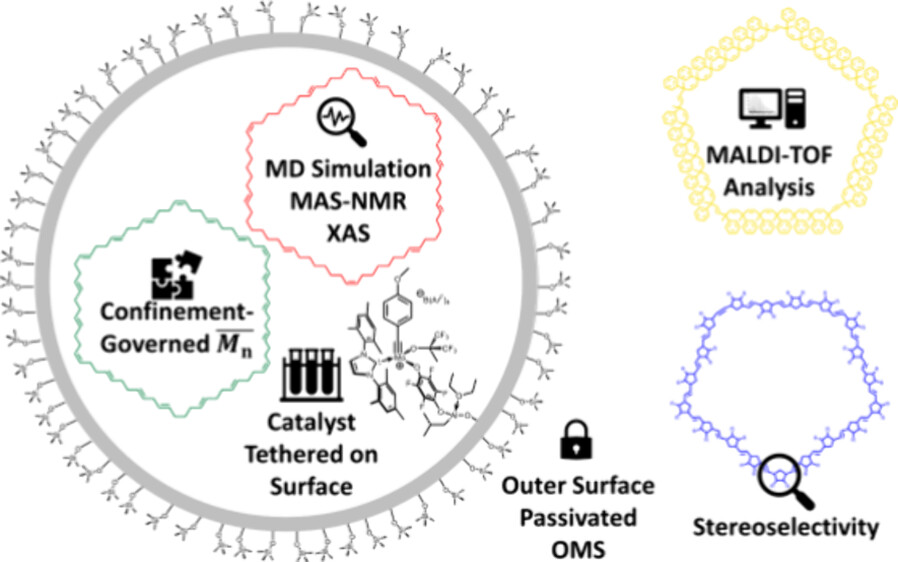
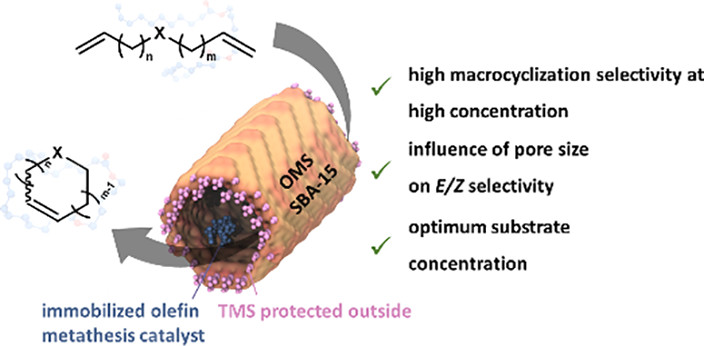
Macrocyclization of Dienes Under Confinement With Cationic Tungsten Imido/Oxo Alkylidene N-Heterocyclic Carbene Complexes
Performance of two complementary machine-learned potentials in modelling chemically complex systems
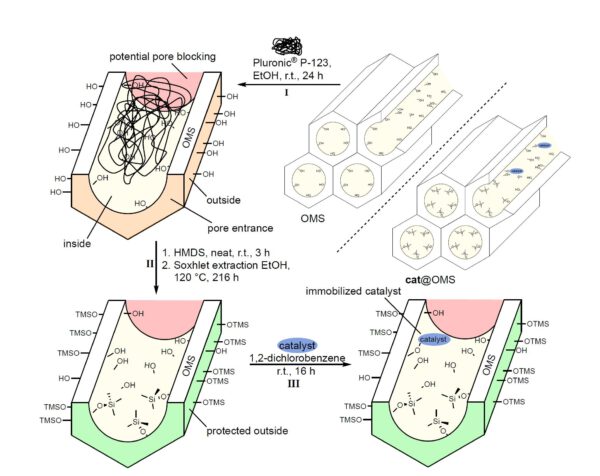
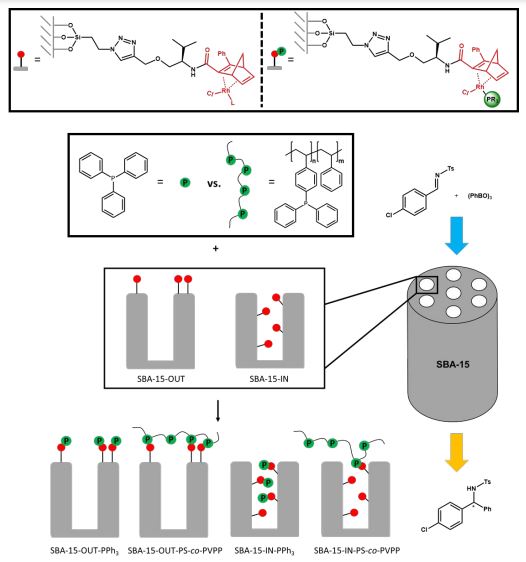
Tethering chiral Rh diene complexes inside mesoporous solids: experimental and theoretical study of substituent, pore and linker effects on asymmetric catalysis
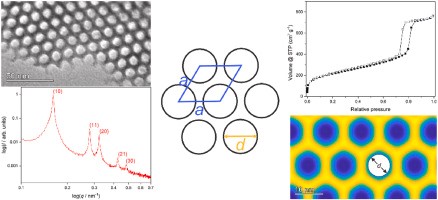
Comparative study of lattice parameter and pore size of ordered mesoporous silica materials using physisorption, SAXS measurements and transmission electron microscopy
A.-K. Beurer, S. Dieterich, H. Solodenko, E. Kaya, N. Merdanoǧlu, G. Schmitz, Y. Traa and J. R. Bruckner
Microporous Mesoporous Mater. 2023, 354, 112508.
The publication can be downloaded free of charge and without registration until May 11, 2023 via the following link: https://authors.elsevier.com/a/1gnb54xQ964rdP