




B05 – CO2 hydrogenation to MeOH
Using Cu Hydrides Confined in Tailored MOFs for the Low-Temperature Hydrogenation of CO2 to Methanol in the Gas-Phase
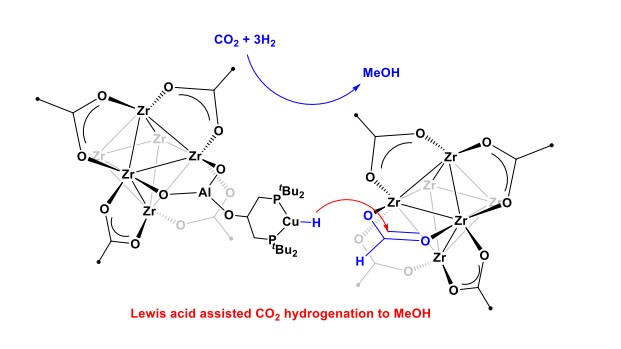
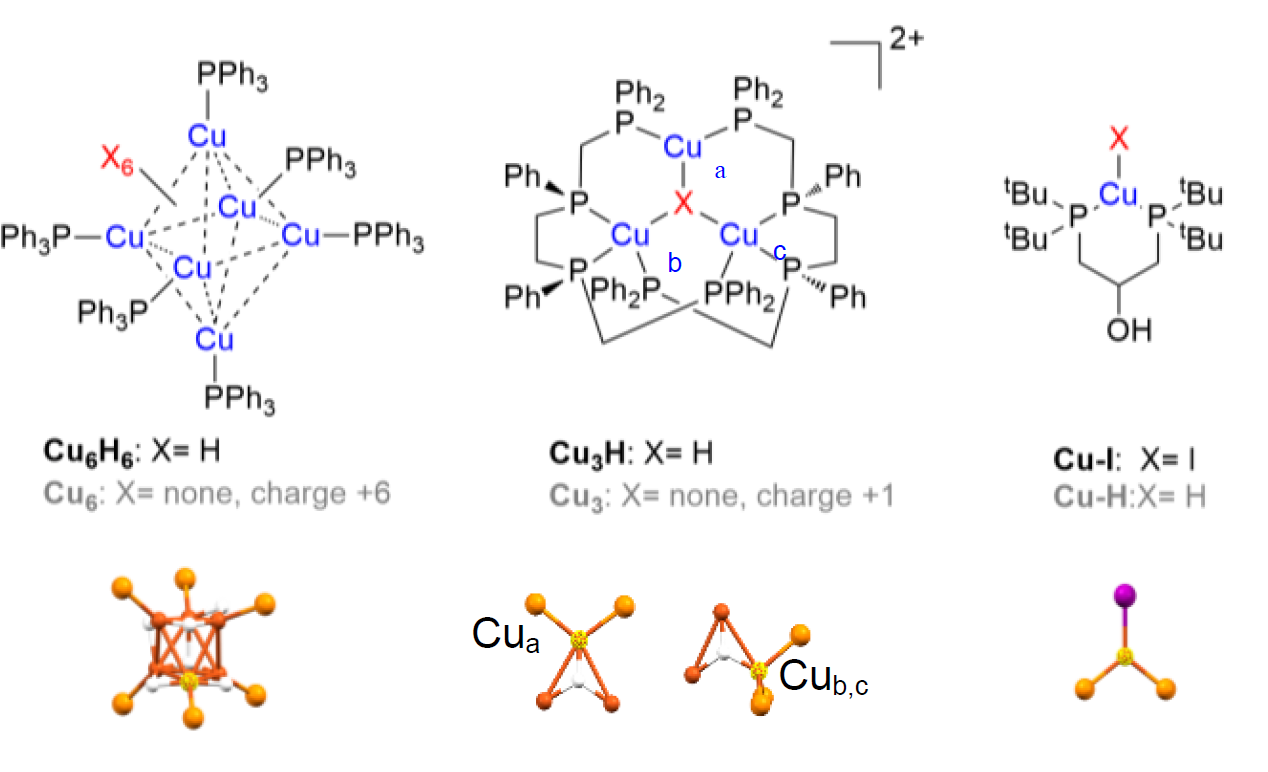
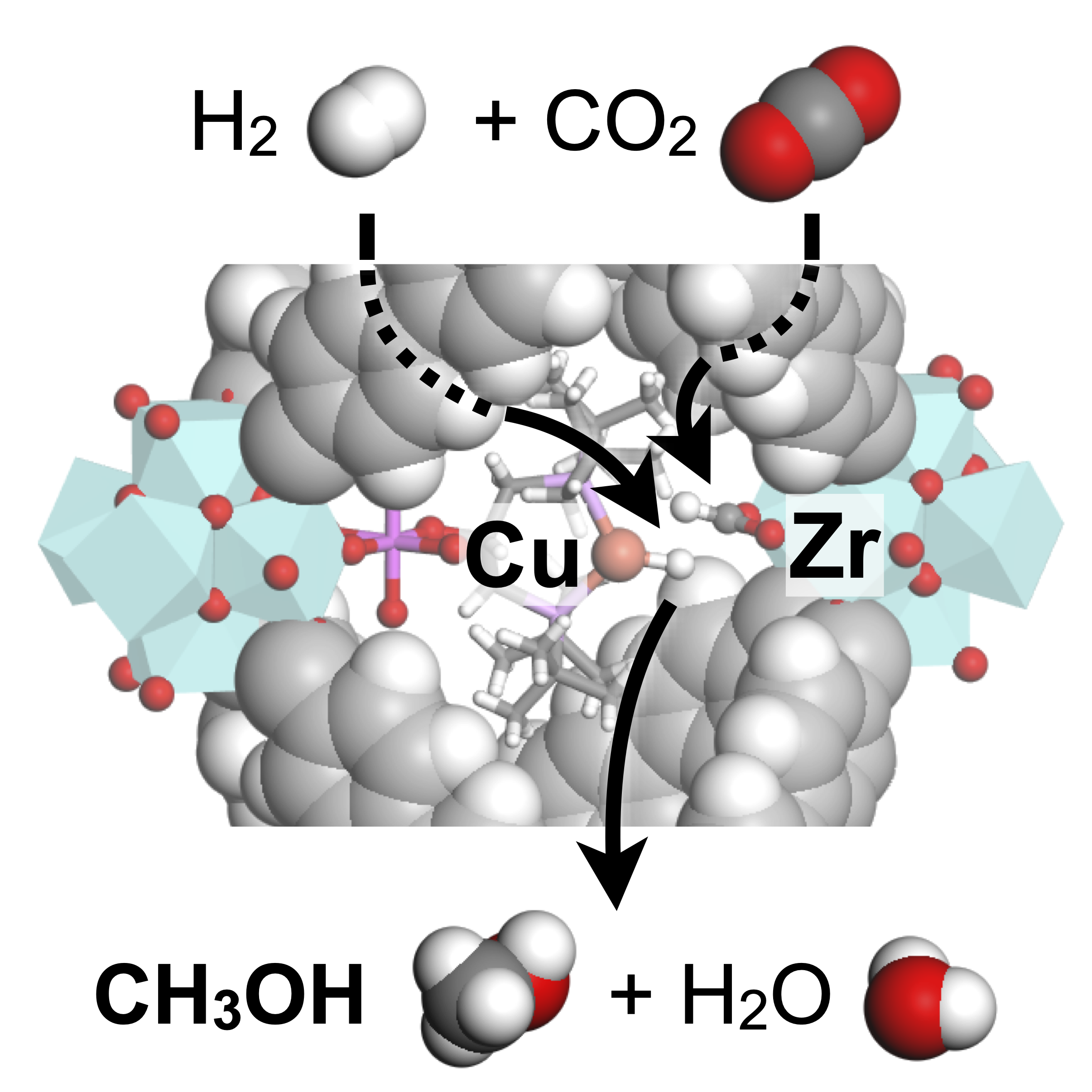
The project develops confined molecular Cu hydride catalysts for low-temperature CO₂ hydrogenation to methanol. Building on the successful immobilization of monomeric Cu catalysts in Zr MOFs, the next phase will optimize catalyst stability and activity by tuning ligand denticity, catalyst nuclearity, and confinement environments in Lewis-acidic and defective MOFs. Advanced spectroscopy and microscopy will track structure–activity relationships, aiming for >90% single-pass methanol yields and extended catalyst lifetimes.
Research focus in the second funding period (2022-2026): Confinement effects in gas-phase CO2 reduction by Cu hydrides immobilized in mesoporous supports
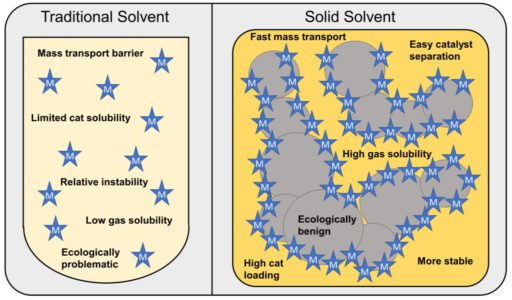
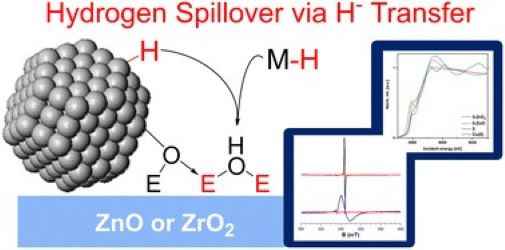
Improving the efficiency and selectivity of gas-phase CO₂ hydrogenation to methanol by stabilizing highly reactive copper hydride species within mesoporous materials and exploiting confinement effects that enhance adsorption, control intermediate transport, and strengthen catalyst-support interactions.