New Publication: Probing polymorphism, isomerism, and solvent-induced dynamics in Fe-based metal–organic frameworks by low-frequency (THz) Raman spectroscopy as an eco-friendly and versatile method.
Authors: Kristina Gjorgjevikj, Esengül Çiftçi, Dominik Blaimer, Timo Manitz, Kerstin Leopold, Simon Krause
Full article in Materials Advances
Abstract
Non-destructive and process integratable techniques that are capable of probing identity and structural features of the ever-growing number of materials are critical for automated and AI-based materials discovery. The rapidly expanding field of metal–organic frameworks (MOFs), as an example, has already yielded a remarkable diversity of over 100.000 structures, not accounting for framework flexibility, which broadens the scope even further.
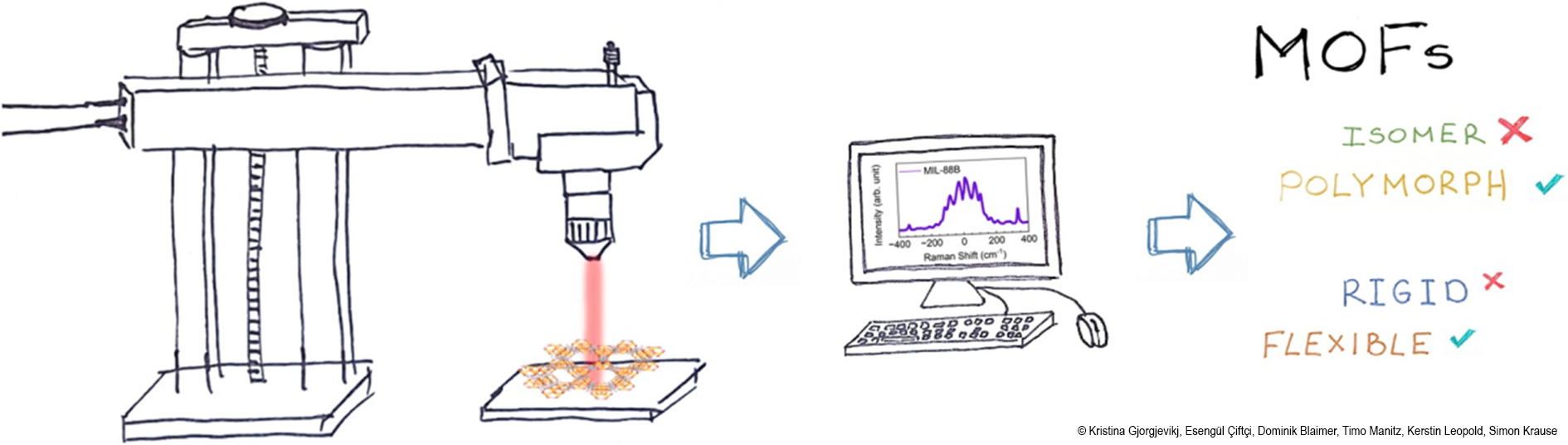
In this work, the authors explore and demonstrate the diverse capabilities of THz Raman spectroscopy for probing framework identity, structural polymorphism, and solvent- and temperature-induced framework flexibility.
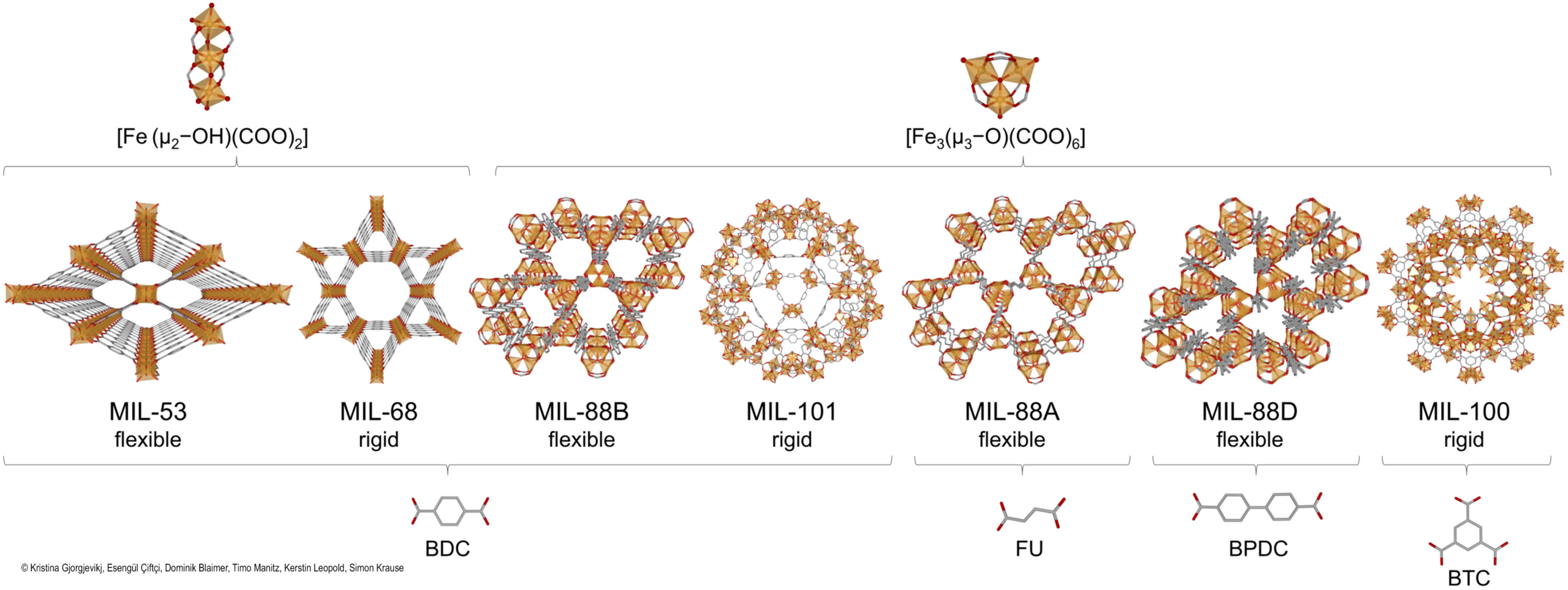
Using iron-terephthalate-based MOFs as model systems, the authors show that low-wavenumber (THz) vibrational modes, in the range of 5–200 cm−1, allow for the differentiation of polymorphs, even when “traditional” high wavenumber Raman spectroscopy proves insufficient. This is made possible by the pronounced response of phonon modes to even subtle structural differences of the crystal lattice.
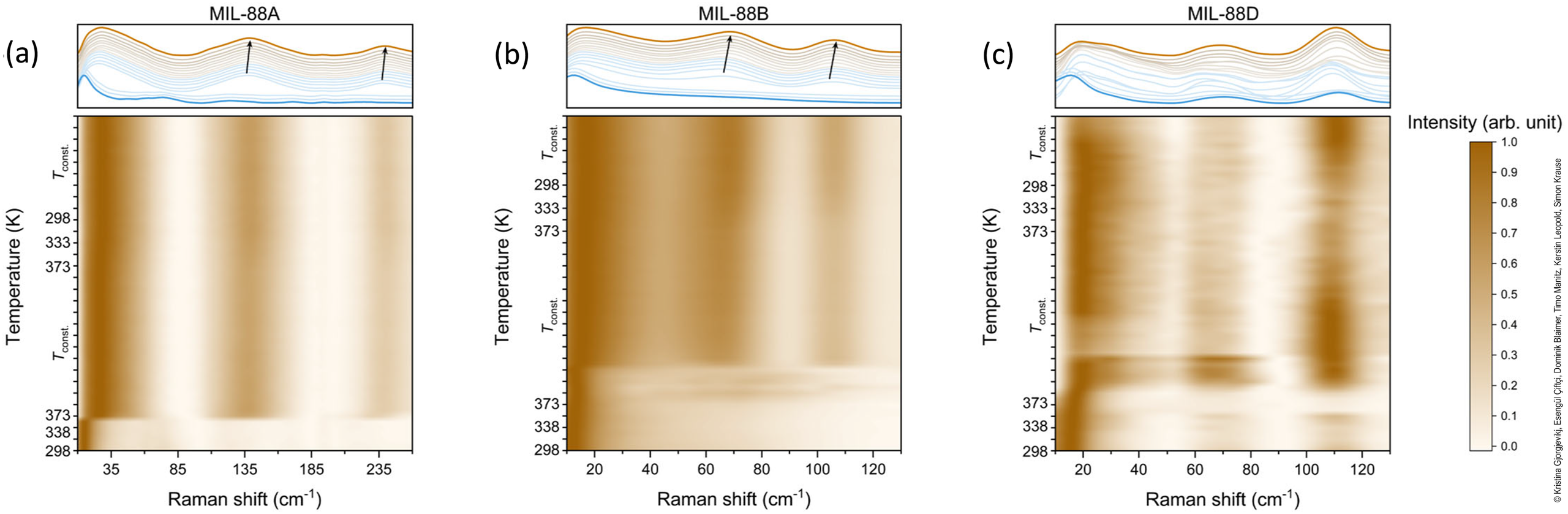
Further expanding on this, the authors utilize the THz modes’ sensitivity to probe solvent- and temperature-induced changes in dynamic frameworks such as MIL-53 and the MIL-88 series, by in situ measurements. Techno-ecological analysis demonstrates the benefits of THz Raman spectroscopy over established methods, such as PXRD, for process integration, in particular, of materials investigations under dynamic environmental conditions.